When a drain stops, you want it moving again, and that is the right priority. But two very different tools can do that job, and picking the wrong one is how homeowners end up paying for the same clog three times in one year. Here is how to tell which one fits your situation.
The quick answer by situation
Start here. Most calls fit into one of these rows.
| Your situation | Usually the right first tool | Why |
|---|---|---|
| First clog in years, one fixture | Cable (snake) | A single blockage in a healthy pipe |
| Toilet blocked by an object | Cable or toilet auger | Pull the object out, done |
| Kitchen sink slow again within months | Hydro jetting | Grease coats the whole wall, and a cable only punches a hole |
| Main line backed up twice this year | Camera, then likely jetting | Something in the line is catching waste |
| Older home, original cast iron or clay | Cable, then camera, then decide | The pipe may not be safe to jet |
| Roots found on a previous visit | Jetting with a root-cutting nozzle | Cuts roots back to the wall, not just a tunnel through them |
What each tool really does
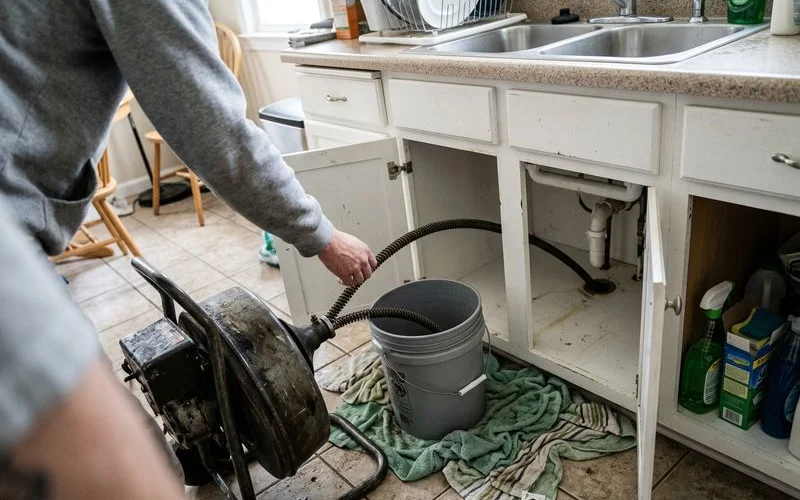
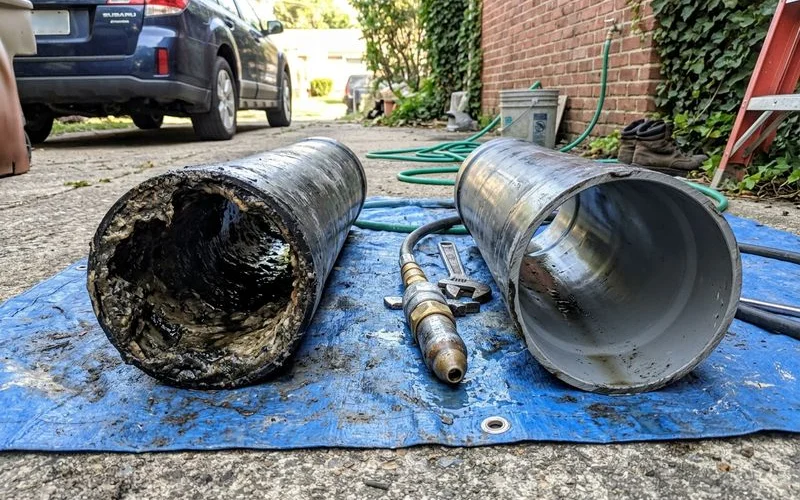
A cable machine spins a steel cable with a cutting head through the pipe. It bores a channel through whatever is blocking the line and can grab and pull material back out. The pipe walls stay much as they were, coating included.
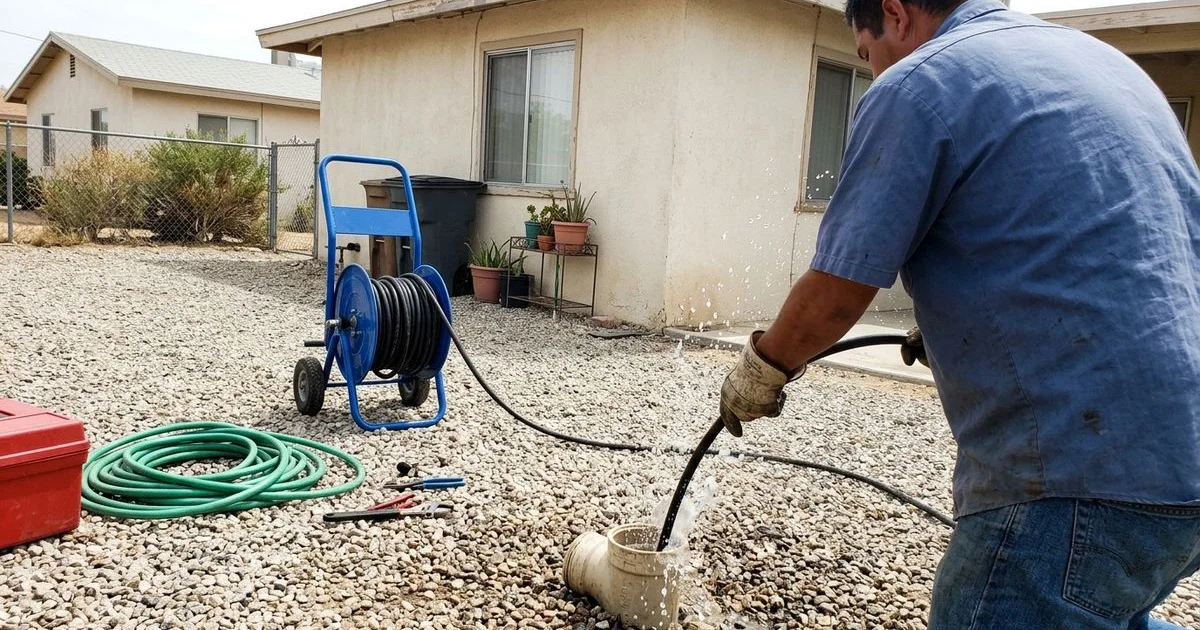
A hydro jetter sends water through a hose at high pressure, with nozzles that spray backward and to the sides. The jets pull the hose forward while scrubbing the full inside diameter of the pipe. Grease, sludge, and soft scale get washed down the line.
Put simply: the cable opens a path, and the jetter restores the pipe.
Side by side
| Criteria | Cabling | Hydro jetting |
|---|---|---|
| Best on | Solid blockages, hair, objects, first-time clogs | Grease, scale, sludge, recurring roots |
| Leaves pipe wall coated? | Yes | No |
| Typical time until the next problem on a fouled line | Weeks to months | Often years |
| Safe on fragile old pipe? | Generally lower risk | Camera first |
| Upfront cost | Lower | Higher |
| Long-run cost on a repeat line | Adds up with every visit | Often lower overall |
Where Yuma’s conditions tip the decision
Hard water in drains. Yuma’s city water carries 18 to 22 grains of hardness per gallon. Most of the scale ends up in water heaters and fixtures, but drain lines collect their share too, especially where hot water from dishwashers and washing machines cools and drops minerals. A cable will not remove that rough crust. A jetter can.
Older central neighborhoods. Homes in the older grid near downtown often still have cast iron or clay laterals, and many of those have tree roots working through the joints. Those lines are exactly where jetting does the most good and also where it needs a camera check first. A cracked clay section can be made worse by high pressure.
Seasonal homes. A winter home that sat empty from April to October can come back with a drain that dried out and crusted. A grease line that was already narrow often clogs fully the first week the owner is back and cooking again.
The repeat-clog test
If the same line has been cleared twice in twelve months, stop treating it as a clog. It is a line problem: grease buildup, a belly, an offset joint, or roots. A cable alone will keep you on a schedule of backups. The better step is jetting plus a camera, so you can see whether the pipe is clean afterward or whether something structural is waiting. Our guide on why the same drain keeps backing up walks through each cause.
Local expert insight
If the camera shows a collapse, a sag holding water, or a joint that has pulled apart, neither tool is the fix. Clearing will buy weeks. Repair is the real answer, and it is better to hear that before paying for another clearing.
What to ask before approving either one
- Will you run a camera before or after, and can I see the footage?
- If you jet, what condition does the pipe need to be in, and how will you check it?
- If this comes back, what do you think the cause is?
- Is there a service call fee, and is the estimate free?
Our drain cleaning service covers both cabling and jetting, with camera inspection as part of the same line of work. Call Yuma Plumbing Pros at 928-756-0095, any hour, in English or Spanish. The automated assistant takes down which drains are affected and how often it has happened, so the plumber knows which equipment to bring.