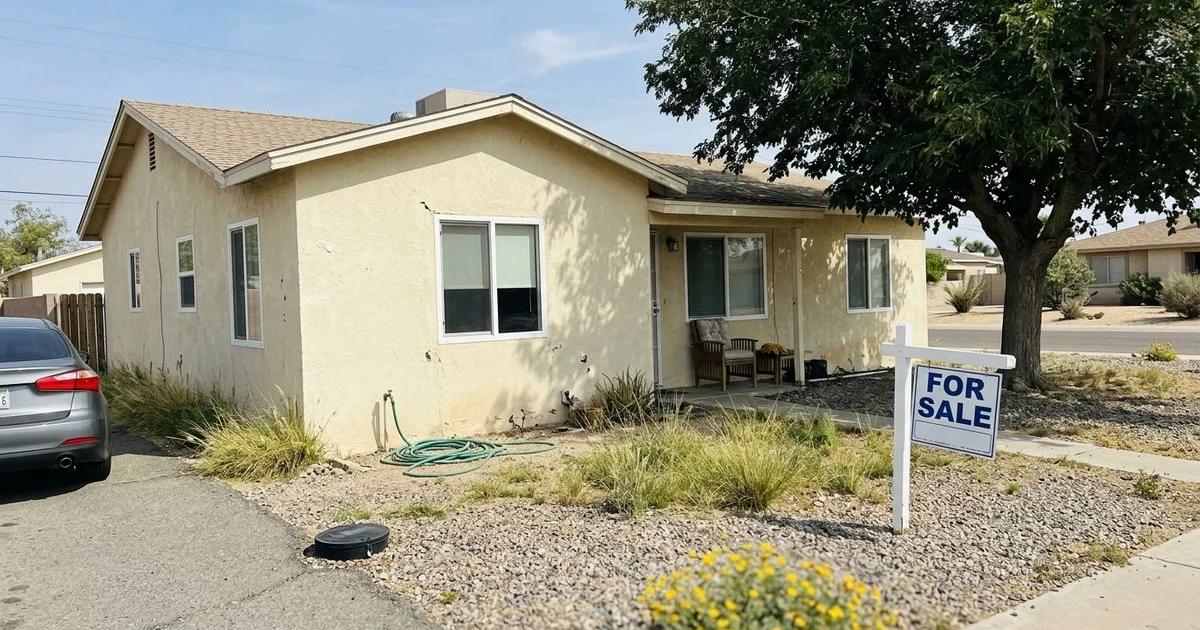
The sewer line under the yard is one of the most expensive parts of a house that nobody looks at before buying. A general home inspection checks what you can see and whether water drains. It does not show what is happening ten feet under the driveway. In the Yuma market, two kinds of homes make that blind spot especially risky.
Two buyer scenarios where it matters most
Scenario 1: The older central home. You are buying in one of the older neighborhoods near downtown or the original townsite. These homes often still have clay or cast iron laterals. Mature trees have had decades to send roots into the joints, and cast iron corrodes from the inside. The line may drain fine during a showing and still be one bad week from a backup.
Scenario 2: The winter home that sat empty. You are buying a part-year home, often from an owner who used it a few months a year. Lines that see little use can hide problems that only show up once a household is running water every day: sagging sections holding sludge, roots that grew while nothing was flushing them, or a dried-out line with crusted buildup.
If the home fits either scenario, treat the camera inspection as standard, not optional.
What a general inspection covers vs a sewer scope
| General home inspection | Sewer camera inspection | |
|---|---|---|
| Runs fixtures and checks drainage | ✓ | |
| Looks at visible pipes under sinks and in the garage | ✓ | |
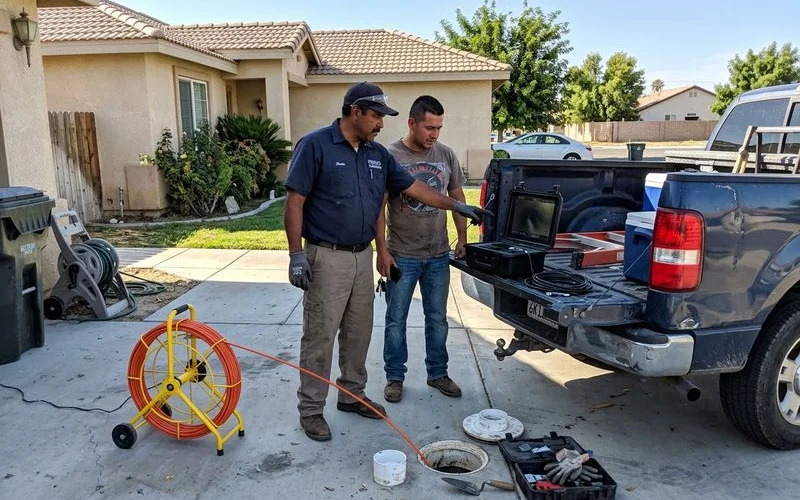
| Sees inside the buried line to the street | ✓ | |
| Identifies pipe material (clay, cast iron, ABS, PVC) | Sometimes, at visible sections | ✓ |
| Finds roots, cracks, sags, offsets | ✓ | |
| Locates the problem from the surface | ✓ | |
| Gives you video you can show the seller | ✓ |
What the camera finds
- Pipe material, which hints at age: clay, cast iron, Orangeburg, ABS, or PVC.
- Root intrusion at joints.
- Cracks and breaks that let water out and soil in.
- Bellies, low spots that hold standing water and sludge.
- Offset joints, where sections have shifted out of line from soil movement.
- Scale and grease narrowing the pipe.
A transmitter in the camera head lets the plumber mark the exact location and depth of any problem on the ground above. That matters when you or the seller get repair quotes.
What to do with the results
| Finding | Typical next step in escrow |
|---|---|
| Clean line, sound material | Close with confidence; keep the video |
| Minor roots, otherwise sound | Plan maintenance clearing; may not affect price |
| Cracked but aligned section | Get a repair quote; ask for a credit or seller repair |
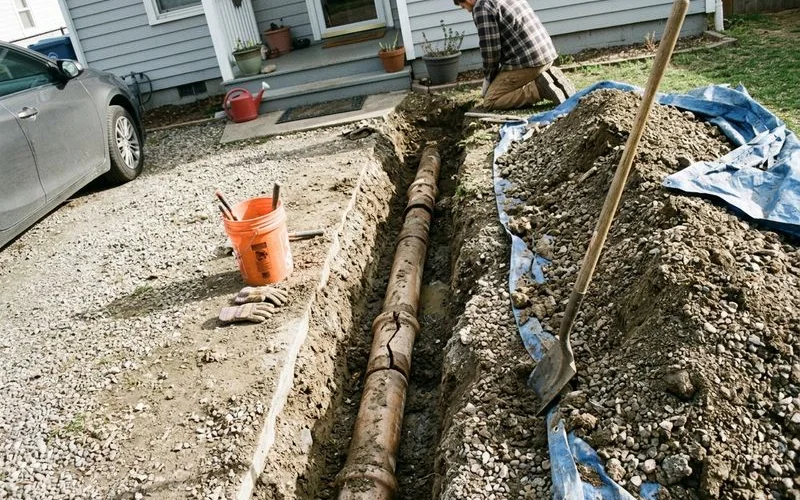
| Belly, offset, or collapse | Get a repair quote now; renegotiate or reconsider |
Our guide on trenchless sewer repair vs dig and replace explains which repair fits which finding, so you know what you are negotiating over.
Timing and logistics
- Book it alongside the general inspection, inside your contingency window.
- Confirm there is a cleanout. Ask the listing agent. Some older homes have none, and the inspection may need a toilet pulled, which requires the seller’s permission.
- Ask for the full video file, not just a written summary. Any contractor quoting a repair can then see the line without charging for another inspection.
- Ask about the fee up front, and whether there is a separate charge if the line first needs clearing for the camera to pass.
Why it pays off either way
A clean result is still worth having. It removes a major unknown, and the video becomes part of your records for the next time you sell.
Camera inspection is part of our drain cleaning and camera inspection service. Call Yuma Plumbing Pros at any hour, in English or Spanish, request a free estimate, and mention your escrow deadline so the visit fits your timeline.