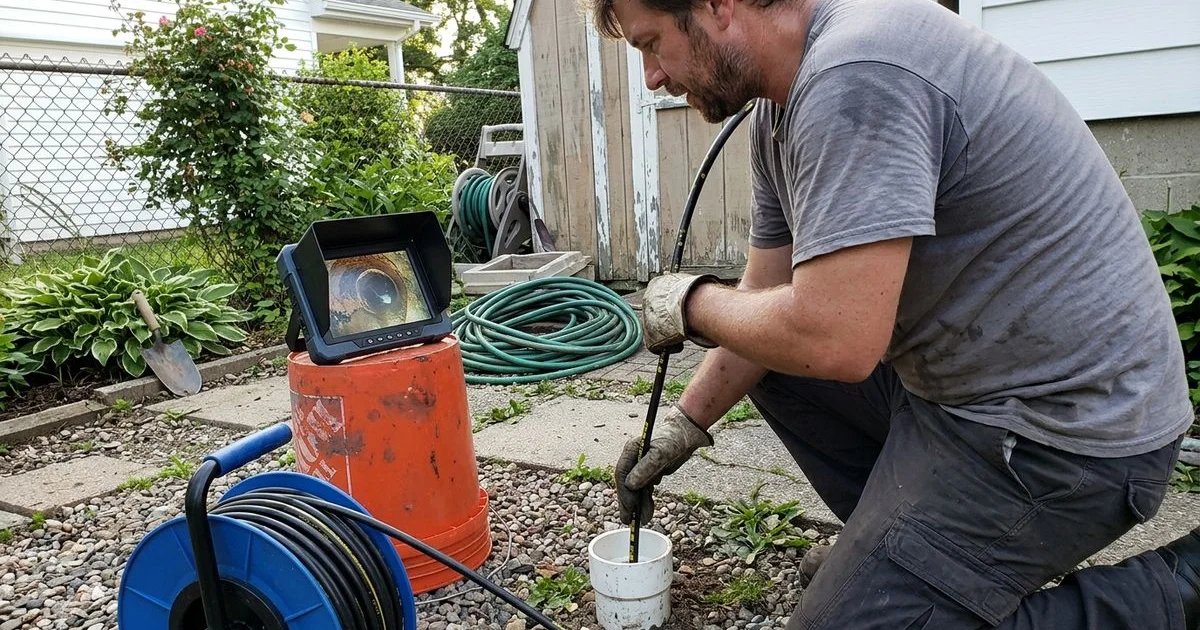
A sewer line runs from your house to the street, underground and out of sight. When it gives you trouble, a camera inspection is the only way to see what is actually going on inside without digging. This guide explains how the inspection works, what common problems look like on the monitor, and when it is worth paying for.
How it works
A waterproof camera head with bright LED lights sits on the end of a stiff, flexible push cable. The plumber feeds it into the line through a cleanout and pushes it toward the street while the video plays on a monitor beside them. You can watch alongside, and you should: seeing roots or daylight through a crack in your own pipe makes the conversation much clearer.
The line usually needs to be flowing first. Standing water or a full blockage hides everything past it. That is why clearing and camera work are often done on the same visit as part of drain cleaning.
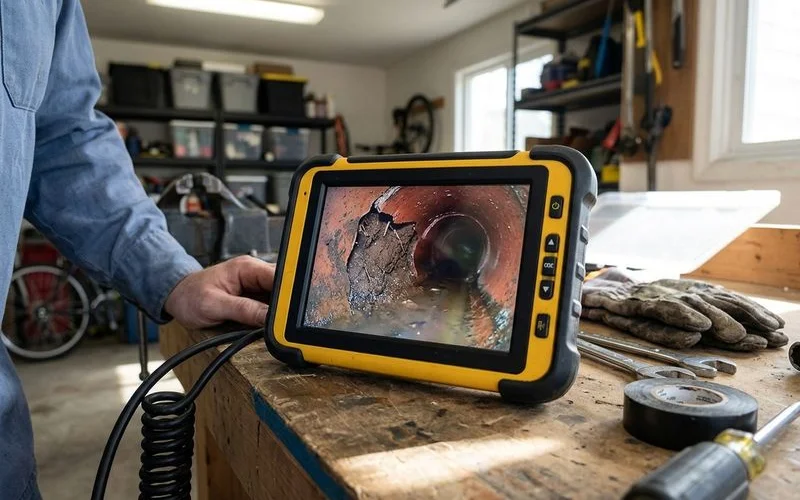
What you will see on screen
| On the monitor | What it is | What it usually means |
|---|---|---|
| Hair-like strands or a dense mat at a joint | Root intrusion | Roots found a leaking joint; they will grow back after clearing |
| A dark line along the pipe, sometimes with soil visible | Crack or break | Water leaking out, soil getting in; tends to get worse |
| Water pooling across the pipe for several feet | Belly or sag | Ground settled under the pipe; solids collect in the low spot |
| A sharp ledge where two sections meet | Offset joint | Soil movement pushed sections out of line; waste snags on the lip |
| Rough, lumpy walls in cast iron | Corrosion buildup | Rust mounds narrowing the pipe and catching debris |
| A smooth coating narrowing the pipe | Grease or scale | Kitchen grease or mineral buildup; jetting usually helps |
| The camera stops at a pile of soil | Collapse | That section has failed; excavation or replacement needed |
| Clean, round pipe all the way out | Healthy line | The backup was likely a one-time event |
What shows up most in Yuma lines
Older central neighborhoods. Homes in the older grid near downtown often have clay or cast iron laterals. Clay joints let roots in from mature yard trees, and cast iron develops rust buildup and cracks along the bottom. The typical finding is not one dramatic break but an old line with several small problems adding up.
Near irrigated land. Soil that cycles between wet and dry moves more, and that shows on camera as offsets and sags.
Hard water. Mineral scale from 18 to 22 grain water narrows drain lines too, especially in lines that carry hot water from dishwashers and washing machines.
The valley pattern
One root ball is a maintenance item. Roots at every joint, plus an offset and a sag, is a line that is wearing out along its whole length. The camera tells you which one you have.
Locating: why it saves money
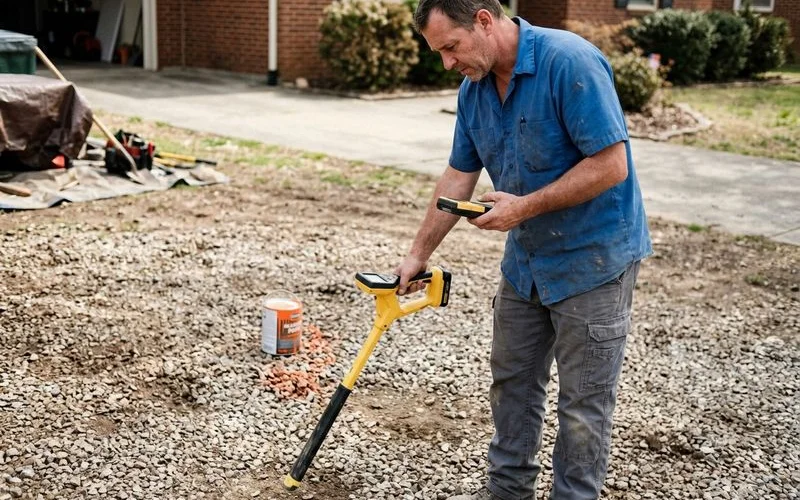
When the camera reaches a problem, the plumber stops it there. A small transmitter in the camera head sends a signal up through the ground. Walking the yard with a handheld locator, the plumber finds the strongest signal, reads the depth, and marks the spot with paint.
That turns a repair from exploratory digging into one targeted opening. It is the difference between cutting a small square of driveway and trenching across the whole front yard.
Five times an inspection is worth booking
- After the second backup in a year. Once is an event; twice is a condition.
- Before buying an older home, inside your inspection period. A general home inspection does not look inside the buried line.
- Before hydro jetting an old line, to make sure the pipe can take the pressure.
- After a backup that caused damage, so you have video for an insurance claim.
- When a repair quote seems large. Ask to see the footage that justifies it.
If you are seeing slow drains, odors, or damp soil at the foundation, our guide on signs of a broken sewer pipe under a slab covers those symptoms.
What you should leave with
You should get live viewing, a copy of the footage, the location and depth of any problem, and a plain explanation of what was found, including “the line looks fine” when that is the answer. Call Yuma Plumbing Pros at any hour in English or Spanish to request a free estimate, and ask about any service call fee before booking.