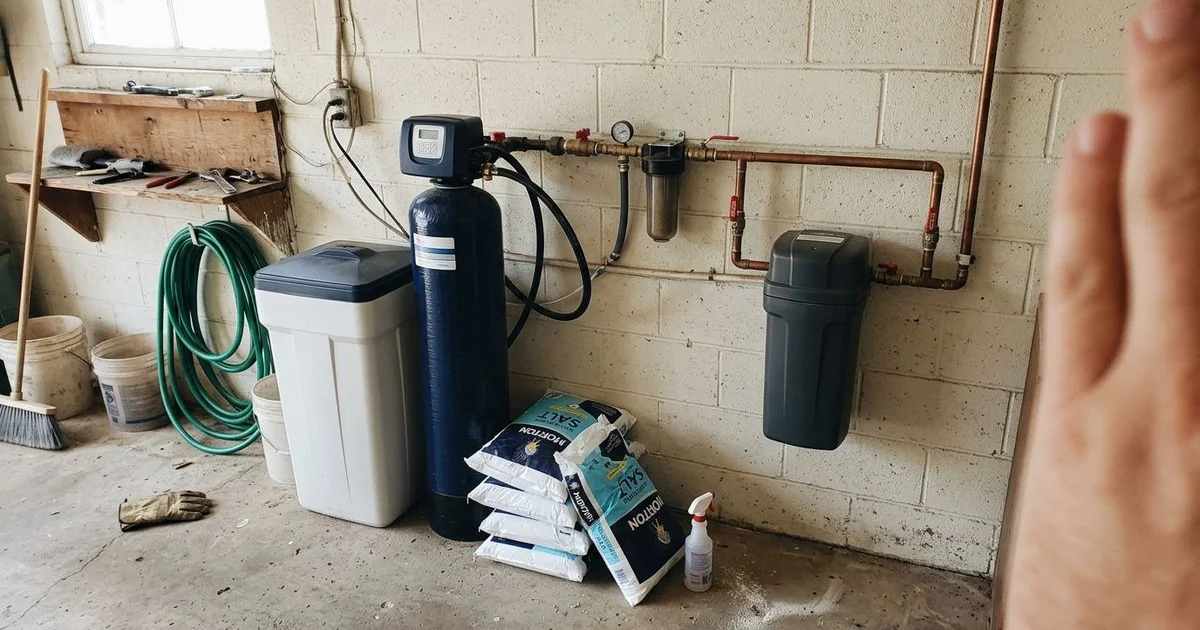
The names cause most of the confusion. “Salt-free water softener” sounds like a softener without the salt. It is not. It is a different technology that does a different job. Here is what each one actually does, and how that plays out at the hardness Yuma homeowners are dealing with.
Two different jobs
A salt-based softener (ion exchange) passes your water through a tank of resin beads. The beads grab calcium and magnesium and release sodium in their place. When the beads fill up, the unit flushes them with salty brine from a second tank, sending the hardness down the drain. Water leaving the softener tests near zero for hardness.
A salt-free conditioner is usually template-assisted crystallization (TAC) media. It passes water over a material that encourages the dissolved minerals to form tiny stable crystals that are less likely to stick to pipes and heating surfaces. The minerals are still in the water. A hardness test after a conditioner reads about the same as before.
One removes hardness. The other changes how hardness behaves.
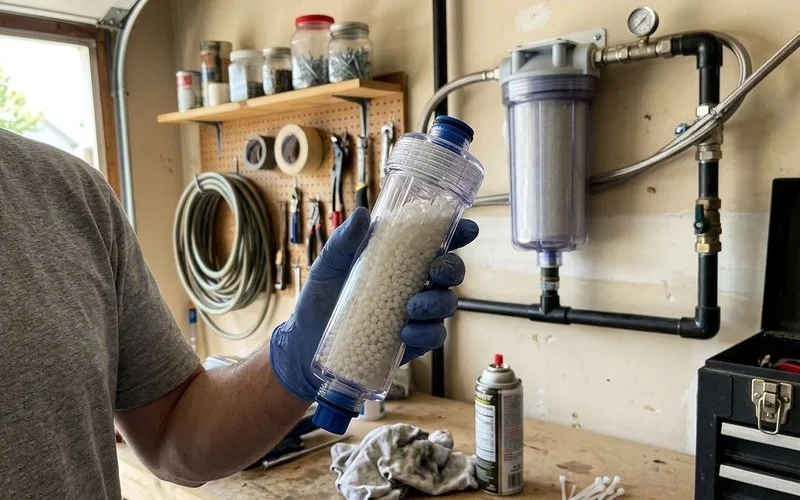
Head to head
| Criteria | Salt-based softener | Salt-free conditioner |
|---|---|---|
| Removes hardness minerals | Yes | No |
| Hardness reading after treatment | Near zero | About the same |
| Water heater protection at 18 to 22 gr/gal | Strong | Partial |
| Spotting and crust on fixtures | Largely stops | Reduced, still present |
| Soap and detergent use | Noticeably less | About the same |
| Existing scale | Slowly dissolves over time | Stays |
| Ongoing upkeep | Salt every few weeks, occasional service | Media change every few years |
| Water used for regeneration | Yes | None |
| Needs a drain nearby | Yes | No |
| Footprint | Resin tank plus brine tank | Compact, single housing |
Why hardness level changes the answer
At moderate hardness, around 7 to 10 grains per gallon, a conditioner can do a respectable job, because there is less mineral to keep in check. The City of Yuma rates its supply at 18 to 22 grains, roughly twice the very-hard line. That is a heavy mineral load moving through your water heater every day, and it is where the gap between the two technologies matters most.
If the reason you are shopping is that hard water already killed a water heater or keeps seizing valves, choose the system that takes hardness out of the water.
Local expert insight
Homes outside the city system draw from groundwater that may test differently. If your own tap reads lower, a conditioner becomes more competitive. Test before you decide.
When salt-free is the right choice
There are real situations where a conditioner is the better fit:
- Nobody can handle salt. Forty-pound bags every few weeks are not realistic for every household, especially if delivery is not available.
- There is no drain. A softener needs a drain line for its regeneration discharge. Some manufactured homes and tight installs do not have one nearby.
- Space is tight. A conditioner is a single compact housing with no brine tank.
- A doctor has restricted sodium. The added sodium is small, but if it matters medically, it matters. (An RO tap for drinking water is another way around this.)
- The home is used part of the year. A winter home with light use has less at stake.
What upkeep really looks like
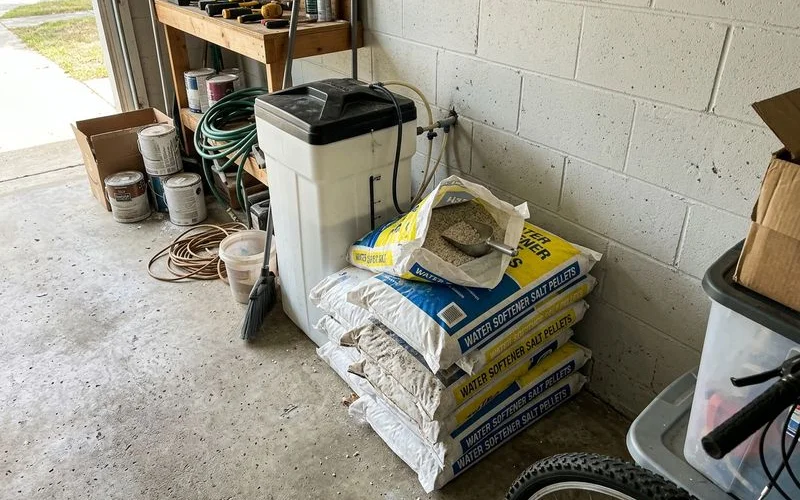
Salt-based: Check the brine tank monthly and top it up, often every few weeks at this hardness. The control valve needs occasional attention, and the resin lasts many years if the unit is correctly sized. An undersized softener regenerates too often, uses more salt, and wears out its resin early; see our guide on softener sizing.
Salt-free: Replace the media on the manufacturer’s schedule, typically every few years. Nothing in between.
The bottom line
For most homes on city water, a salt-based softener is the system that actually solves the problem. A salt-free conditioner is a legitimate choice when salt, space, or drainage rules a softener out, as long as you know it reduces scale rather than removing hardness.
Our water softeners and reverse osmosis service starts with a hardness test at your tap. Request a free estimate from Yuma Plumbing Pros, answered 24/7 in English or Spanish, and ask about any service call fee before booking.